Crackdown on ‘Fraudulent’ Olive Oil at Canadian Retailers Says Expert

Date:

Share post:

Olive production in Italy was hard hit last year due to an early frost. The country’s olive production dropped by 57%. Both Greece and Portugal suffered a similar fate, along with pest issues, and saw their production drop by 35% and 15%, respectively. Pressures generated by shorter supplies with any food product have historically generated more cases of economically-motivated adulteration. This is often the case for spices, tea, vinegar, wine, and of course, olive oil. For fear of losing market share from forced higher retail prices, companies will sometimes commit food fraud in order to cut costs. However, in the case of olive oil, the Canadian Food Inspection Agency appears to have things under control.
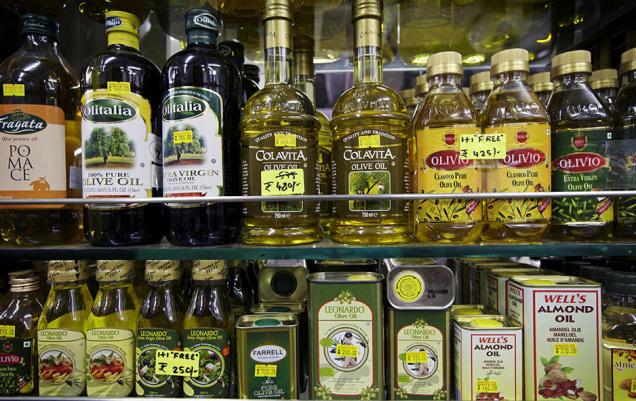
PHOTO: DIET OF LIFE

Since June, 2018, many Canadians have noticed that retail prices for olive oil have gone up by over 40% in some cases. When olive oil gets more expensive to produce, processing companies may be tempted to adulterate their products by using palm oil, soya oil or even sunflower oil. The first cases of adulterated olive oil go back to the Roman Empire, so this isn’t a new issue. Even some well-known brands have been involved in cases of adulteration. It is quite easy to switch ingredients, as most consumers would probably not notice the difference in taste. Food fraud affects many food categories, but stakes are a little higher with olive oil, due to potential allergens in substitute ingredients.

In recent years, the CFIA has actually tested some products if it suspects them to be fraudulent. In 2013, 39% of random tests found adulterated olive oil. A total of 28 samples were collected across the country. That ratio went down to 10% in 2018, with the random testing of 20 samples. Obviously, these results do not mean cases of food fraud are actually down in Canada – far from it – but reports are encouraging, nonetheless. This may suggest that the industry is now fully aware that our federal regulator is checking and will find fraudulent products. Anything more than 0% is too high, but the situation appears to be improving. A study out of California a few years ago estimated that almost 69% of all olive oil imported to North America was fraudulent. Most fraudulent products in the study had been produced using chemicals, making them ineligible to be considered extra virgin. The recent numbers determined by the CFIA are nowhere near that high.

Food fraud remains one of the most significant challenges in the food industry. According to some estimates, the intentional adulteration, substitution or misrepresentation of food for financial gain costs the global food industry well over $70 billion. The practice lowers standards for all in the industry and makes conditions for compliant food companies more difficult. Worse, given that mislabelling is the ultimate outcome of food fraud, many consumers with health conditions are exposed to unwarranted risks from hidden ingredients.
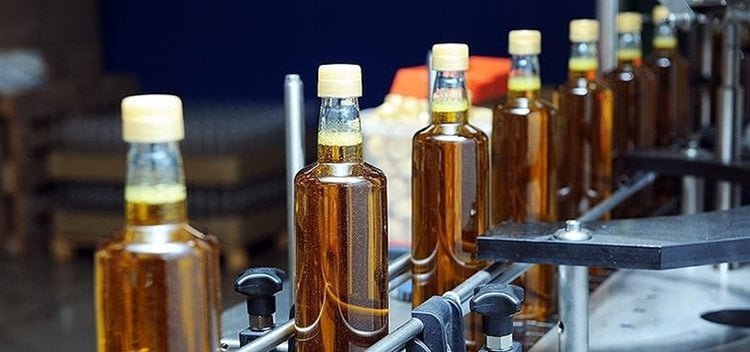

PHOTO: WONDER HOW TO

With new technologies, a change in consumer expectations about food fraud, and regulators playing a more active role, fraudulent behavior is slowly becoming marginalized. Such an accomplishment should be celebrated, but much more needs to be done. Public awareness and education, as well as allowing consumers to report suspicious products should be encouraged. The most common cases of food fraud in Canada remain misrepresentation with organic and local products. A simple laboratory test only to identify foreign ingredients is not nearly enough. 

It has been argued recently that blockchain technologies can help the food industry address food fraud. The concept has merit, but its case for market currency remains to be proven. Many grocers have embraced the approach while facing some resistance higher up the food supply chain. For blockchain technologies to work, all involved within the supply chain must comply.

In the mean time, for olive oil enthusiasts, vigilance is a virtue. Typically, 500 millilitres of good quality olive oil should cost 15 to 16 dollars to produce. Price points at retail for good olive oil should be higher than this. So, if you are looking at a bottle retailed at 10 dollars or less, just walk away. 

RELATED ARTICLES

Subscribe to the Newsletter

Subscribe

* indicates required

RECENT articles

Canada/U.S. trade talk collapse to lead to immediate and significant impact on small business: CFIB

"A full 40% of small Canadian exporters will be directly hit by these tariffs and nearly one-third expect their revenues will drop by 50% or more as a result."

Joe Mimran Outlines Product and Global Growth Plans for Roots

Joe Mimran discusses plans for Roots product, stores and U.S. growth as Marquee Brands and Roots CEO Meghan Roach point to significant international expansion.

Shoppa.ca launches online marketplace for Canadian-owned businesses

The marketplace includes businesses from across the country and products in categories including beauty and skincare, apparel, home and living, pets, kids and baby, food and wellness.

Canadian retail sales surpass $74 billion in June: Statistics Canada

Core retail sales rose 1.2% in June, posting their second consecutive monthly gain.

Good Earth Coffeehouse opens new location at Indigo Metrotown in Burnaby

The opening adds another location to Good Earth's network of more than 50 coffeehouses across Canada.

TJX Says Winners, Marshalls and HomeSense Are Gaining Major Market Share in Canada

TJX says Winners, Marshalls and HomeSense are gaining major market share in Canada as customer transactions rise and the retailer expands in prominent malls and downtown locations.

Home Depot Canada Sales Accelerate Despite Challenging Housing Market

Home Depot Canada outperformed the broader company in Q2 as comparable sales, transactions and unit growth improved despite a subdued housing market.

AutoCanada Sees Canadian Auto Market Remaining Challenging

AutoCanada says affordability pressures continue to weigh on Canadian vehicle buyers as it improves dealerships, used sales and collision operations.

Canadian sponsorship spending reaches $4.7B as industry study marks 20 years

Professional sport continues to account for the largest and most significant sponsorships, but the study found that brands are spreading spending across a broader range of categories.

Daily Synopsis: August 20, 2026

FreshCo expands in Nova Scotia, Circle K promotes customized drinks, downtown Ottawa retail expected to return to pre-pandemic levels, Kiokii and opens in Windsor, and other news.

Roots to Go Private as Joe Mimran Takes Key Operating Role

Roots has agreed to go private in a $4.10-per-share deal that will see Joe Mimran and Frank Rocchetti’s JM&A take a central operating role in the Canadian retailer.

Cargojet Sees E-Commerce Growth as Retail Shifts in Smaller Canadian Markets

Cargojet says e-commerce is driving growth in secondary Canadian markets as store closures and changing inventory strategies reshape retail distribution.

Boston Pizza Accelerates Canadian Restaurant Renovations, Adds New Locations

Boston Pizza is ramping up investment across Canada with more than 40 restaurant renovations possible in 2026 and three new locations under construction.

HelloFresh Expands Factor Across Canada as Ready-to-Eat Strategy Grows

HelloFresh is expanding Factor across Canada as it invests in ready-to-eat meals, new distribution channels and a broader convenience-food strategy.

Public safety and construction deal heavy blows to Edmonton downtown businesses

"The once vibrant pulse of Edmonton’s downtown is fading further, leaving behind a landscape that feels increasingly desolate.”

Empire to acquire nine Morelli’s pharmacies in Ontario

The pharmacies will be brought into Sobeys’ National Pharmacy operations as part of the transaction.

Canadian Tire Prepares for AI Shopping as Retail Strategy Evolves

Canadian Tire is using AI to reshape merchandising, back-to-school assortments and digital content as shoppers increasingly turn to AI for product discovery.

Healthy Planet expands to Yonge and Eglinton with 45th Ontario location

Launches Annual Good Food Drive to help fight food insecurity across Canada

Skin Excellence Medspa offers 30% discount as it launches influencer partnership program

The initiatives give the clinic two approaches to attracting customers: a price reduction across its service menu and a partnership program designed to generate promotional content through local creators.

Fizz expands retail presence through EB Games Canada partnership

The agreement marks an expansion of Fizz’s in-store presence as the company continues to build its wireless business beyond its original Quebec market.