Retail giant Costco is poised to continue to grow its market share in Canada in the coming years and widen its sales margin over Walmart as the second highest in the country behind Loblaws, says a retail expert.
Toronto-based Amar Singh, a senior analyst on retail and ecommerce for Canada with Kantar, a global data, insights and consulting company, said Costco is the second largest retailer in Canada now and ahead of Walmart, Sobeys, and Metro.
“One of the reasons it has been successful is their grocery expansion. It’s more becoming a grocery store now with a very strong grocery presence,” said Singh. “And it still delivers on its true value hunt experience which Canadians love.

“Costco has very strong penetration as much, if not higher, than Walmart in Canada, but Loblaws as we all know is the biggest retailer across all channels and with all the portfolio and presence that they have in Canada. But Costco is really a competitor. And what we forecast is that it is going to widen its gap to Walmart in terms of revenue. It’s going to dwarf Walmart over the next five years as well.”
Because most of Canada’s population lives in the urban centres, Costco has been very strategic in placing its stores. When it first moved into the country, it targeted urban centres and suburbia.“They have very strong accessibility amongst Canadians and on a per capita basis the penetration of Costco in Canada is greater than the U.S.. Canada over-indexes when it comes to penetration,” said Singh. “On a per capita basis, Costco has a higher penetration in Canada versus the U.S. and that’s just because Costco has been very strategic of where they opened their clubs and with that they’re accessible to most Canadians.”
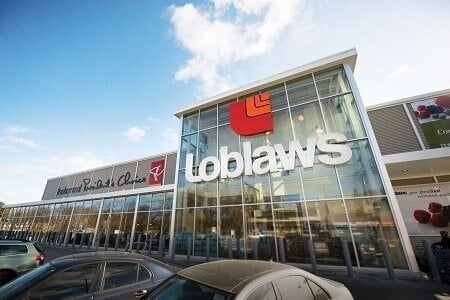
PHOTO: GEORGE WESTON LIMITED 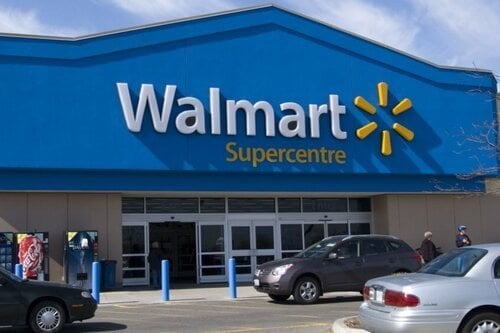
PHOTO: WALMART CANADA
Singh said it’s important to understand why Costco has been successful in Canada and what Canadians expect. “You’ve got to understand the Canadian shopper DNA. Canadians are value driven shoppers. What that means is they expect good quality but pricing is important to them,” he said. “The price value equation is very important to them. As well, Canadians are open to non-traditional brands. So as long as you can provide good quality and good benefits Canadians are not married to brands. They’re open to try new things and try differentiated offers.
“Costco does all of the above. It provides great value with the packaging and the product offering and what it is doing now with Kirkland, its private label brand, they are providing differentiated products in grocery, in general merchandising, in consumables, non-edibles as good quality product with very low margins.
“In Costco’s playbook, they make money by memberships. Membership signings and renewals. That’s their business model. They are not too hung up on margins. That’s why they give the value back to their members. So the club is designed to bring in people, more traffic inside the club and then provide that value hunt experience more of a cash and carry experience but also now differentiating themselves with the private brand and offering.” Costco also provides gas stations and auto services that attract traffic to the stores. They also offer low cost travel packages, for more info on that check out this guide about Costco Travel.

Singh said that over the past year or so the home and beauty category has been an area where Costco has expanded as has medical devices such as contact lenses. “We believe that expansion is going to still continue beyond contact lenses. If you look at other medical devices they will provide in the club, Costco will get into that in terms of like thermometers and what have you. But the model really is get people to come to the club,” he said.
“That’s one of the reasons they’re not doing pick up services in Canada. They’re delivering. That’s alright. They’re delivering in Ontario the corridor of the (Highway) 401 where it starts in Windsor all the way to Ottawa. They guarantee two-day delivery on non-perishables and consumables. But we don’t think they are going to start pick up services because they want members to get inside the club. That’s important to them.”
Recently, U.S.-based Costco Wholesale Corporation announced its operating results for the 16-week fourth quarter and the 52-week fiscal year, ended September 1, 2019.

Net sales for the quarter were $46.45 billion, an increase of 7.0 per cent from $43.41 billion during the similar period last year. Net sales for the fiscal year were $149.35 billion, an increase of 7.9 percent from $138.43 billion during the similar period last year.
The company said net income for the fourth quarter was $1.097 billion, or $2.47 per diluted share, compared to $1.043 billion, or $2.36 per diluted share, last year.

Net income for the fiscal year was $3.66 billion, or $8.26 per diluted share, compared to $3.13 billion, or $7.09 per diluted share, in the prior year.
Costco currently operates 783 warehouses, including 544 in the United States and Puerto Rico, 100 in Canada, 39 in Mexico, 29 in the United Kingdom, 26 in Japan, 16 in Korea, 13 in Taiwan, 11 in Australia, two in Spain, one in France, one in Iceland, and one in China. Costco also operates ecommerce web sites in the U.S., Canada, the United Kingdom, Mexico, Korea, and Taiwan.