Levi’s has a rich history dating back to 1853 and the retailer has become synonymous with denim jeans, but over the years the giant retailer has adapted to the ever-changing market, tweaking its product offerings to meet customer demand.
“Levi’s created the denim category. So clearly we have a heritage and a provenance that I think the most recent entrants into apparel space don’t have,” said Nicolas Versloot, managing director for Levi Strauss and Co. in Canada. “But we’re not resting on our historic laurels. We’re continuing to innovate in terms of product. We’re also continuing to market.
“One of the reasons why we’ve been successful is we’ve managed to not only maintain absolute denim leadership position with our heritage jeans or men’s bottoms but we’ve also targeted the female consumer with a more lifestyle proposition. So if you look at our growth rates, our tops business and our women’s business is growing faster than our men’s bottoms business.
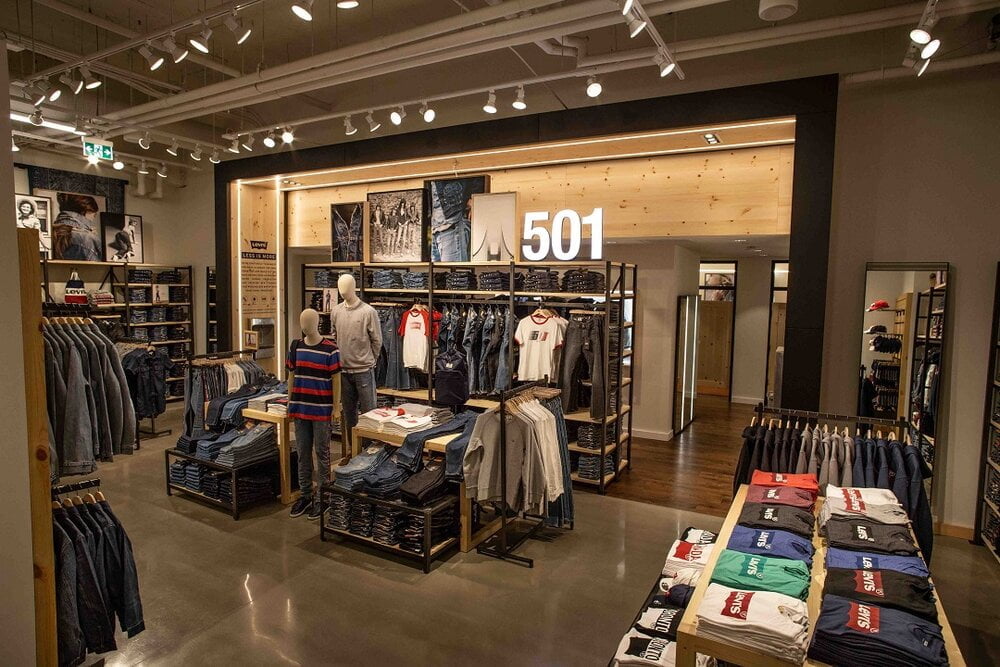


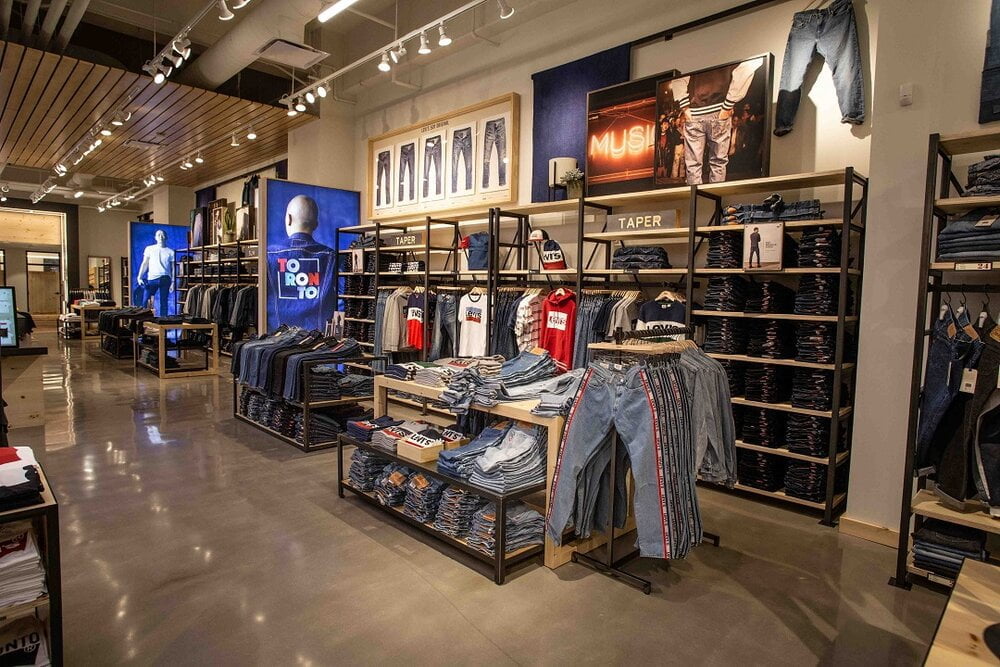
“It’s been very deliberate. We’ve given that assortment more space because we were a very male-biased brand and we know that the female consumer shopper shops more, spends more. So that’s why we’ve moved more into a lifestyle proposition. The other thing worth mentioning is that we’ve really positioned the brand as the centre of culture. We target major music festivals and events – and we’re also targeting personalities like Alicia Keys, Justin Timberlake, etc.”
The brand began in 1853 when Levi Strauss, an immigrant from Bavaria, opened a dry goods company in San Francisco at the height of the California gold rush. He recognized that there was a need for hardworking people to have clothes that were built to last. That led to the blue jean being created in 1873. Today, the retailer has more than 500 stores worldwide in about 100 countries.

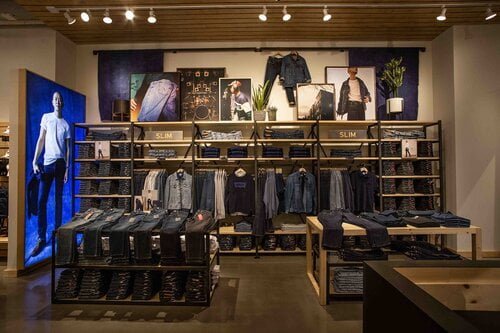
The brand has 33 retail stores in Canada with the most recent being Levi’s in Ottawa which opened August 31 at the CF Rideau Centre.
“We’re continuing to expand,” said Versloot. “What we would typically do is we do a market mapping exercise and we identify opportunity based on malls, power centres, and when vacancy becomes available, we will pursue them. But we’re quite prescriptive about size, traffic, footfall, location. We may have a plan to open a certain number of doors but we might not be able to fulfill that plan because the opportunities don’t come up,” said Versloot.
He said Levi’s appeals and resonates with both adults and a younger demographic.
“We frame that as being very democratic, very approachable, not pretentious. I think the other thing we’ve done is we’ve continued to make it relevant. Drawing an emotional connection to the brand. We say that people wear jeans but you live in Levi’s. There are lots of people with amazing anecdotes about their first pair of Levi’s and they talk very emotionally about it. Even when they can’t wear them anymore they still hang onto them. So there is that very strong emotional connection,” said Versloot.
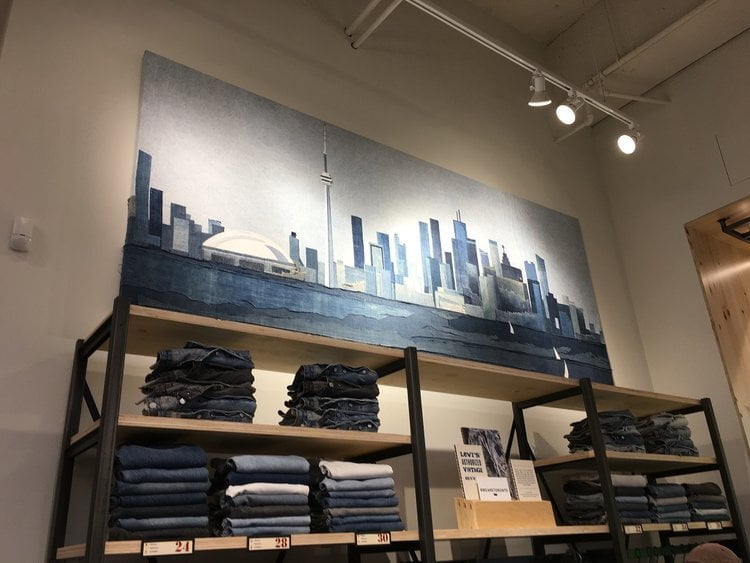
“The other way we’ve kept it relevant is through innovation. We have a waterless platform which is part of our sustainability discussion which resonates with young people.”
The company’s latest Canadian store in Ottawa features a tailor shop which takes up a fair bit of real estate at the location which would normally be used for selling product. But the company has invested in elevating the consumer experience, said Versloot, “because our trend research and our consumer insights have identified that sort of mega trend of mass customization as being replaced by personalization.”
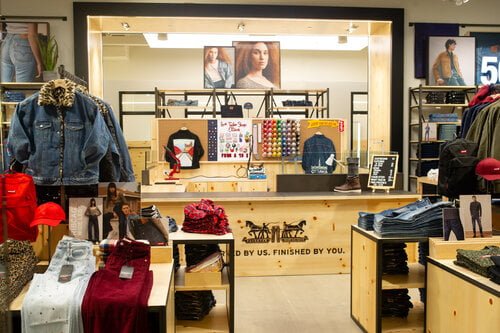
PHOTO: LEVI’S 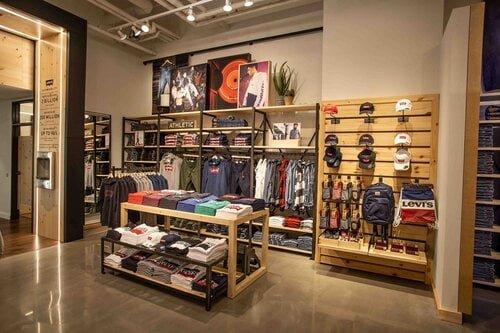
PHOTO: LEVI’S
“So people really want to make a statement about who they are as an individual.”
People are trying to carve out an identity for themselves as individuals and so the tailor shop gives them that opportunity. Clothing can be embroidered. People can have patches put on the clothing. They can be distressed in a particular way to their liking.
“That really resonates with young people,” said Versloot. “We like to describe it as the tailored trucker jacket is the apparel equivalent of a tattoo. That captures the essence of the tailor shop opportunity. That’s a very distinctive feature of the Rideau store. Not all of our stores have a tailor shop.”
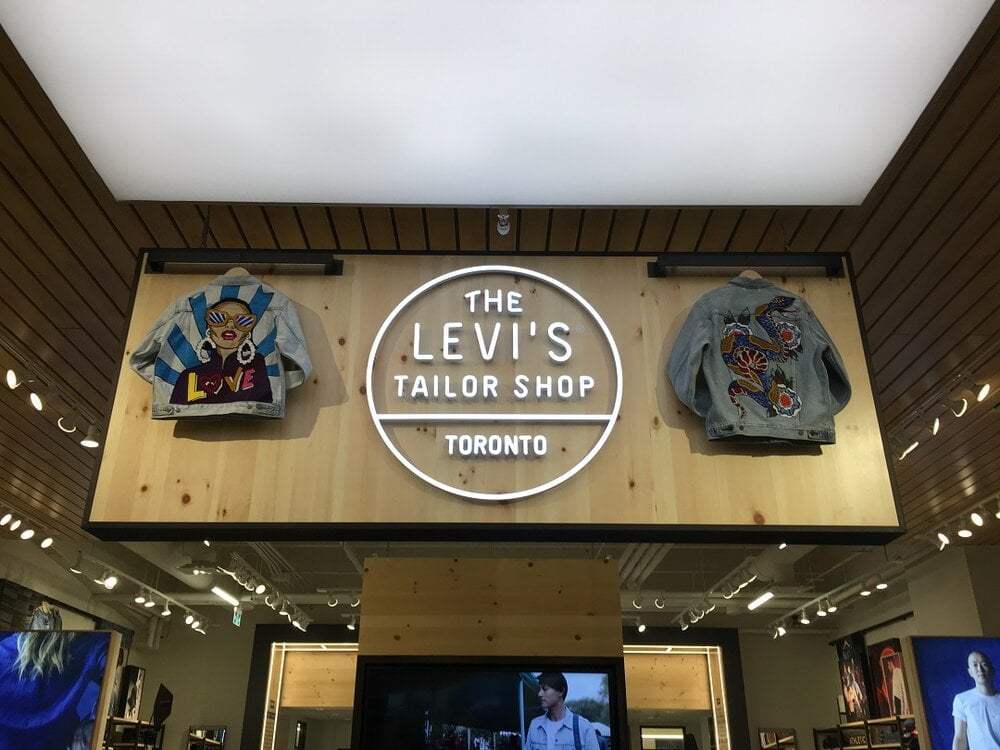
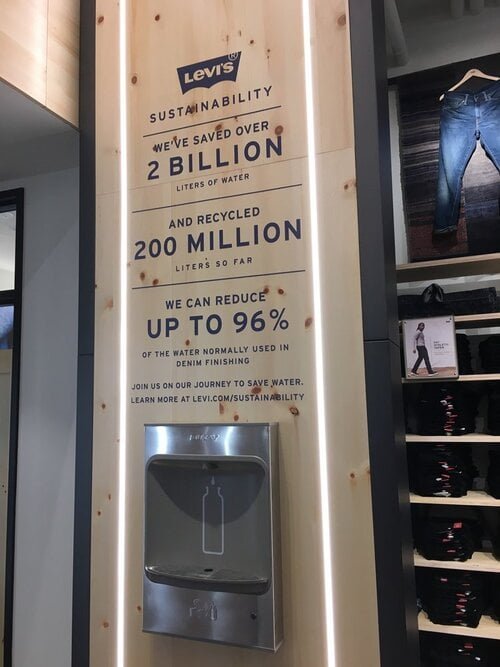
PHOTO: LEVI’S 
PHOTO: LEVI’S
He said in the future Levi’s could introduce a system where a consumer could come into the store, scroll through an iPad looking at clothing items, identify a design they like, and personalize it to their liking.
Levi’s opened its Canadian flagship store at Toronto’s CF Eaton Centre in June 2018.
“One of the things we are trying to do in Canada, across the board, is really elevate the consumer experience and that’s why we opened the store in the Rideau Centre, that’s why we’re doing tailor shops, that’s why we opened the Toronto Eaton Centre flagship store. But we’ve also put a tailor shop in a couple of our wholesale partner stores as well because I don’t think the consumer necessarily differentiates. If we can elevate the experience online, offline, wholesale, retail, outlet, I really think that’s the recipe for future success,” said Versloot.