

Industry experts are predicting that the remainder of 2019 could be a challenging one for some retailers in Canada, though there are also opportunities for exceptional brands in various markets. There’s been a slight slowing in international retailers entering the country by opening stores over the past year, and landlords say that it’s become more challenging to lease retail space, with cannabis companies being a notable exception. Several recent bankruptcies and store closures in Canada also have some concerned, though there are opportunities for success if retailers address the new reality.
In 2018, about 30 international brands entered Canada by opening their first stores. That was down from the 50+ that entered the country in 2017, which was a record. There’s uncertainty in the world as events unfold with international trade disagreements, geopolitical tensions, technological challenges, and increased labour shortages — that’s on top of an already slowing economy. Some retailers are taking a moment to reflect on what’s happening, and where the industry is headed, though we continue to see international brands enter the market with more announcements to come.

Store Closures: We got off to a rocky start in January and February of 2019 when several major chains filed for bankruptcy and announced that they were closing stores. That’s not unusual in the industry, as companies evaluate their overall operations after the busy December holiday season. US chains such as Gymboree announced that they were closing all stores in Canada, with Lowe’s also announcing that it was closing 27 Rona locations. Crabtree & Evelyn has shuttered almost all stores worldwide, including Canadian units. Canada’s Town Shoes chain closed its final stores in January, and Jean Machine shuttered its remaining storefronts. Reitmans athletic brand Hyba will no longer have standalone stores (the line will be available at Reitmans stores). Other chains such as J. Crew have been closing stores across the country with an uncertain future, and smaller local operators such as Enda B in Vancouver have recently closed up shop as well.
February saw more store closure announcements. That includes Payless ShoeSource, which will close all 248 Canadian stores as well as about 2,300 in the United States. Hudson’s Bay’s home furnishings chain Home Outfitters also announced that it would close all 37 stores, which means there will be a considerable amount of retail space to fill.
At the same time, some retail chains are seeing tremendous sales growth, so it’s not all bad news. Canadian chains Lululemon and Aritzia continue to see strong sales, as with Canada Goose, boasting storefronts selling well in excess of $10-million each. Apple stores are known to be the most productive stores in the world on average in terms of sales per square foot, and electric car retailer Tesla’s mall locations can do astronomical numbers (fortunately they won’t all close as was recently announced by CEO Elon Musk). Jeweller, Tiffany & Co., also continues to be strong, though sales are said to be down a bit which is blamed, in part, on decreasing revenue in China.
Chinese money is important to retailers globally and by the year 2025, it is estimated that about 50% of all luxury sales will be to those living in China, or shopping internationally. Vancouver, in particular, is reliant on such sales, and in the fourth quarter of 2018 it was said that some stores catering to affluent shoppers were seeing decreasing sales, with some concern. That was even before the arrest of Huawei’s CFO in Vancouver in December, which has resulted in some bad blood while at the same time creating even more global uncertainty amid various allegations.

Canada Remains a Target for International Retailers: International retailers will continue to descend on Canada, according to industry experts, as the country remains an attractive growth market for companies testing the waters before expanding into other global markets. Jay Freedman, Vice President of Business Development at Oberfeld Snowcap, says he believes brands will continue to see the Canadian market as being attractive as international retailers look to grow by expanding globally.
Mr. Freedman predicts we’ll see new Australian brands in Canada in the coming years as companies look to markets with similarities, including language and laws. Plenty of Asian retailers are also opening stores in Canada, he noted, while others are expanding. Muji and Uniqlo are examples of Japanese retailers that are looking to expand store networks nationwide, with Korean skincare brand Innisfree about to announce its first Canadian storefront.
Canada saw an influx of luxury brands over the past several years, which Mr. Freedman attributes to a variety of factors. The Canadian market was somewhat underserved in terms of standalone luxury brand stores, with one of the newest trends for luxury retailers being opening direct-to-consumer storefronts, not to mention launching local e-commerce websites. Brands with access to Canadian sales data, be it from their own e-commerce sales data or from other sources, are being used to gage demand before entering the market with new stores, he noted.
Mr. Freedman specifically discussed how international brands are able to use online sales data as a determining factor to open brick-and-mortar stores. In a geographic area where e-commerce sales and brand awareness are high enough, opening physical storefronts makes sense. Brick-and-mortar stores increase website traffic for brands in a market as much as 37% according to the International Council of Shopping Centre’s ‘Halo Effect’ study which was recently discussed in detail in Retail Insider.
Hype from positive press (no doubt including from Retail Insider) discussing store openings as well as Canada’s growth (Toronto recently became the fourth largest city in North America) has led to international companies looking in our direction. There’s also something of a ‘herd mentality’ amongst some retailers, particularly luxury brands — that has resulted in a rapid increase in the number of pricey boutiques opening on Canadian street fronts and in major shopping centres, and that trend is expected to continue into 2019 with several more luxury brands about to make announcements for their first Canadian locations (we’ll endeavour to be first to announce these).
Over the past several years, Toronto’s Yorkdale Shopping Centre has launched more first-to-Canada retail brands than any place in the country. That will continue into 2019 and beyond as landlord Oxford Properties positions two more mall corridors to house world-renowned luxury stores. Claire Santamaria, General Manager at Yorkdale, explained how the landlord endeavours to be a “good business partner” with existing retailers, while also striving to find brands that guests are looking for. “That includes sought-after brands that we would like to introduce into the marketplace, and that takes time and effort,” she said. Yorkdale’s sales continue to grow and could soon exceed $2-billion for the first time according to sources, while also surpassing the $2,000 per square foot annual sales threshold.

Shopping Centres in Canada Continue to Transform: Canada’s shopping centres continue to outperform those in the United States overall, and that trend is expected to continue into 2019 as landlords invest heavily in their properties. Retail Council of Canada’s latest Canadian Shopping Centre study, authored by Retail Insider’s Craig Patterson, discusses a few key points while identifying trends seen in major centres. Productivity in terms of sales per square foot saw increases in almost all centres in 2018 when compared to 2017, and Canada’s malls continue to see year-over-year productivity gains overall when compared to those in the United States.
The study also identifies some interesting trends seen in the top shopping centres in Canada. That includes the addition of large-format food halls and food markets at some centres. Upper Canada Mall in Newmarket became home to Canada’s first such food market in the fall of 2018, and several more are in the works and are set to open in the near future, including at Square One in Mississauga in April and at Galeries de la Capitale in Quebec City. More will follow into 2020 and beyond, according to major landlords.
‘Experiential’ is a buzzword in the industry, and some shopping centre landlords are adding non-retail attractions to draw-in visitors. Vaughan Mills, north of Toronto, will become home to Canada’s first Cirque du Soleil Entertainment Centre this year, and other concepts such as The Rec Room will open at some centres.

Challenges Ahead: There are some challenges on the horizon for street-front retail in Canada, with increased property taxes in cities such as Vancouver, Calgary and Toronto being a challenge. In many instances, property tax increases are being passed onto retailers at a time when foot traffic is down in some areas. As a result, some independent retailers and restaurants are struggling and may close, and larger chains are also re-evaluating their operations as profit margins decline.
Retail rents in Canada are often higher than those in the United States with less negotiation, and a higher cost of doing business is another hurdle for some brands. As a result, some are predicting that more US chains will look to shutter their Canadian operations, while other international chains take a hard look at their future in this country.

Retail Staffing: Some retailers will find it challenging to attract and retain talent in Canada this year, as unemployment in many regions is low, and in some cases higher-paying jobs may be available. Industry expert Suzanne Sears, who owns Toronto-based Best Retail Careers International Inc., said “From a retail staffing perspective the landscape is going to be more and more challenging to keep existing staff and bring new people into the industry as the volatility in retail makes it seem risky as a long term career.” Ms. Sears went on to say, “However, those retailers who invest in their staff experience as much as their customer experience are likely to prosper. The lines between “great to work for” and “not to work for” are becoming very solid. Employment brand reputation will dominate as never before.”
Despite some of the challenges, international brands are expected to continue entering Canada. Brokers are aggressively pursuing some new big names, and some shopping centre landlords are also directly reaching out to new brands in partnerships to differentiate their malls.
Brands that have also entered the country are expected to continue opening more stores. Over the past couple of years, Toronto and Vancouver have primarily been the markets brands have opened their first stores, and now some secondary markets will also be getting some of the stores that opened in the two entry cities. Oberfeld Snowcap’s Jay Freedman provided one example of men’s casual fashion brand UNTUCKit, which plans to open several stores in Canada this year after opening its first unit at CF Sherway Gardens in Toronto in the fall of 2018. France-based sports retailer Decathlon, which entered Canada last year with a store in suburban Montreal, will further expand with more locations. There are plenty of other examples, he said.

Consumer debt levels in Canada are at an all-time high, resulting in less discretionary income to spend on non-necessities. Consumer spending patterns are also changing as many seek out ‘experiences’, be it a trip or a great meal. Consumers are spending more on technological gadgets, which means that some traditional retailers may see reduced sales amid competition from pretty much anything that might be costly. There’s been a big shift in the way Canadians are paying for homes amid challenges that include increased real estate prices and mortgage stress tests.
Carl Boutet, Montreal-based retail strategy consultant, said “I predict increased market polarization. The middle will be increasingly challenged while both luxury retail and value/discounters will continue to thrive. I’m also expecting the continued growth of the “long tail” of engaging urban indie shops,” he said.

Bloor-Yorkville Transforming: Toronto’s Bloor-Yorkville is undergoing a transformation that will make it almost unrecognizable. This fall, Eataly will open its first location in Canada at the Manulife Centre, which is undergoing an overhaul to its substantial retail podium. Aritzia has just expanded its Bloor Street store to become a flagship, and Dior will open its largest store in North America this spring at The Colonnade. Holt Renfrew is renovating and expanding its Bloor Street flagship and more luxury retailers will be announced for Bloor Street as well as nearby Yorkville Avenue. Other area developments, most of which will include retail space, are in the development process with investments into the billions of dollars.

Luxury Retail: As mentioned above, luxury retailers are expected to continue to descend on Canada. While many in the ‘middle class’ are struggling, affluent Canadians continue to get richer. We might therefore expect to see even more pricey offerings in some retailers, and Holt Renfrew, for example, is preparing for the influx. Vancouver’s Holt Renfrew store is nearing the end of a multi-year renovation and expansion that has resulted in it being the top-selling department store location in Canada, and in Toronto, the Yorkdale Shopping Centre’s Holt Renfrew store will unveil new boutiques for Gucci, Fendi, Dior and others. In Toronto’s Yorkville, new flagships to open for Dior, Brunello Cucinelli, Versace and Stone Island will be opening later this year, and brokers we’ve spoken with say others are on the way.
In Vancouver, Hermes will open a two-level flagship at the southwest corner of West Georgia Street and Burrard Street, while Richemont brands Montblanc and Vacheron Constantin will open shopfronts on Alberni Street. Wealthy Montreal shoppers will have more access to luxury brands in an expanded 250,000 square foot ‘Holt Renfrew Ogilvy’ (which will finally be completed in 2020, though some of it opens this month), featuring leased concessions from brands including Chanel, Fendi, Dior and Louis Vuitton. Luxury is also expanding in Alberta — CF Chinook Centre in Calgary recently added a Louis Vuitton boutique, and West Edmonton Mall will be adding a Louis Vuitton this summer with other luxury brands expected to follow.

Off-Price Retail: Off-price shopping continues to expand in Canada as well. Nordstrom Rack opened its first six Canadian stores in 2018, and more are on the way this year as Nordstrom Rack plans to eventually operate as many as 15 stores in this country. TJX’s Winners, HomeSense and Marshalls nameplates continue to open stores rapidly, which is being made possible in part as landlords repurpose boxes formerly housing Target and Sears stores (both of which exited Canada).
Plenty more off-price retailers will be on the way. BiWay co-founder Mal Coven says he’s opening a revived concept called ‘BiWay $10 Store’ and the first location will be opening in August in a strip mall at 5990 Bathurst Street in Toronto. Many more could follow if the concept is successful. Dollarama continues to open stores and Japanese-themed retailer Oomomo will open several this year as well — watch for a 25,000 square foot Oomomo flagship to open in Markham this spring.

Online Retail: E-commerce is expected to continue to grow in Canada as more consumers shop online, though e-commerce is growing slower in Canada than in years past. Web-based shopping, which has seen purchases on mobile devices exceed those done on desktop computers, has been growing at a considerably faster rate than numbers seen in brick-and-mortar retailers. At the same time, studies are showing that physical storefronts drive sales to online retailers, and the reverse is also true, with a ‘halo effect’ where opening a physical store in market leads to a substantial increase in overall web traffic. As a result, we have seen pure-play online retailers opening physical stores with considerable success. Canadian brands such as Frank & Oak and Indochino are examples, and US-based eyewear brand Warby Parker and mattress-in-a-box concept Casper will continue to open stores in Canada into 2019 and beyond.
Furthermore, Amazon continues to gain market share in Canada. Amazon Prime memberships have increased substantially in Canada over the past couple of years. While online shopping represents less than 10% of the Canadian retail market, it’s growing much faster than sales at physical stores, signalling a shift as well as challenges and opportunities. Loblaw recently introduced a loyalty program similar to Amazon Prime where groceries can be delivered free of charge, and we predict others will quickly jump on the bandwagon (including Lululemon, which is expanding after a successful pilot).

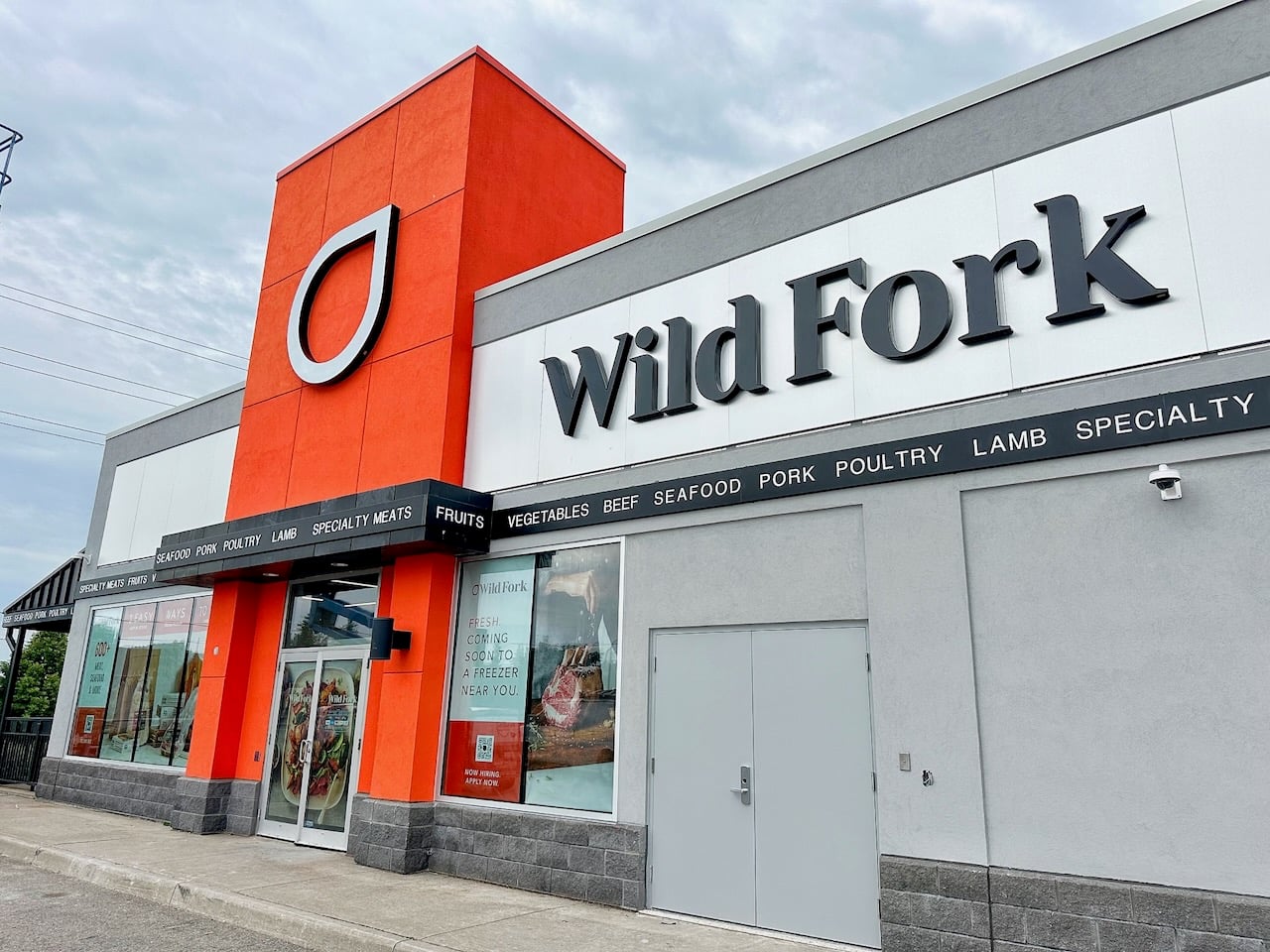
Grocery Retail: Grocery retail in Canada has never been more competitive. Dominated by Loblaw, Sobeys/Empire, Metro and Overwaitea, smaller players are coming on the scene and the result is industry disruption. Ottawa-based chain Farm Boy was recently acquired by Sobeys, following several other mergers in the margin-tight grocery industry. Concepts such as Organic Garage, Nations Experience and Filipino concept ‘Seafood City’ continue to open stores rapidly. At the same time, shoppers are looking to meal kits for dinner — that is, if they’re not ordering via Foodora or Uber Eats. Experts predict that grocery delivery will continue to gain popularity in 2019 while at the same time, online grocers such as Fresh City Farms open physical stores in Toronto.

Cannabis: Cannabis was legalized in Canada in October of 2018 and stores began to open soon after, depending on the province. Supply has been one of the main issues, which has in some instances limited the number of retail storefronts in may areas. Alberta recently halted new store applications after running out of stock, and some stores in other provinces have even been forced to close due to supply challenges. Canada’s largest province, Ontario, will open its first legal dispensary locations in April, and the entire process has been a disaster according to many. In April of this year, 25 lottery-winning retailers are expected to open their first stores in Ontario if they can get their act together in time (or face significant fines) and we predict several bankruptcies in the Canadian cannabis industry this year.
Street-front landlords have been telling us that cannabis retailers have been aggressive in trying to secure space, in some cases offering rents considerably higher than other potential tenants. Some companies have requested conditional offers on their leases amid uncertainty, though some with enough resources have been leasing spaces with the risk that storefronts might never open — or alternatively, ‘brand experience’ storefronts that won’t carry cannabis flower, if at least initially.
Cannabis is expected to account for about $6.5-billion in retail sales in 2020 in Canada, and as supply issues are resolved and licensed providers are added, the sector is expected to see hundreds of new stores and tens of thousands of retail jobs in the coming years.
Some landlords have told us that cannabis retailers have been offering $60-$70/square foot premiums for spaces, which is welcome at a time when other retailers are closing, and some are seeking to renegotiate leases.
Conclusion: We’ll continue to monitor the Canadian retail industry for the remainder of the year and report on interesting trends. While some are predicting that 2019 will be a challenging year for retailers, other are optimistic that the industry is evolving rather than experiencing a ‘retail apocalypse’ as has been reported in the press, primarily in the United States. What do you predict for Canada’s retail scene this year and into 2020? Feel free to comment below.







Showing the best news isn’t an accurate way to evaluate the reality shopping malls across Canada. For most brands getting into one of the top ten shopping malls is next to impossible, especially for startups or smaller companies that might have less than 5 stores. Would be a far more interesting article is the shopping malls in all cities over 150,000 people were shown to give a broader idea of what is happening to shopping malls across the country as they start replacing anchor stores that pulled out with government services, short term lease gyms and other types of businesses that do very little to bring customers to the stores that struggle once the anchors leave a mall. Most shopping malls in smaller cities are not attracting anyone new and seem to be catering to food courts filled with people that have nothing better to do or have become a hang out for seniors that don’t spend much on clothing or have much disposable income. Seems to me that the malls are mainly doing whatever they have to just to fill vacant space with no consideration of the existing tenants growing business. They do not seem to have any imagination, not willing to try something innovative nor want to spend any money to market the shopping mall when they have lost the biggest retailers. Like a number of businesses now days they use the excuse that they do marketing on social media and other online methods to not have to spend money on more traditional marketing that once worked because it has a higher cost plus requires hiring someone with more experience than just being able to make a post on facebook or any of the other platforms that do nothing to bring customers in to experience what the individual stores have to offer. The costs have increased due to long hours, higher wages, higher rates, and taxes yet the sales are down and there is less traffic. Some malls have even resorted to renting parking space to companies that use their lots for employee pickup points which creates the deception there are more people in the mall than there actually is, and makes parking harder for potential customers.
Why not paint a real picture of shopping malls and the ways developers hurt existing shopping malls by not revamping and repurposing existing properties.
Retail is an important part of the economy for jobs and the companies that struggle competing with online shopping in Canada because of expensive shipping when Canada basically subsidizes China’s e-commerce with its postal agreements. It’s not an even playing field for retail in Canada when online shopping is one of the biggest problems retailers face but can’t offer because of the costs to get the product to customers from within Canada, especially with cheap throw away clothing when compared to luxury brands.
Maybe your business is funded in part by the property companies so exposing the full picture isn’t in your best interest.
You bring up some very good points. Our reporting skews towards being positive, and we agree with your comments. These are very challenging times for some retailers and landlords in Canada, and there will indeed be more store closures. There will even be some surprising closures in some of Canada’s top malls in 2020-21, not to mention in secondary properties.
Possibly even more concerning is urban street-front retail in Canada. Increased costs have led to closures with many more to come, even on top streets such as Bloor St. W. and Queen St. W. in Toronto.
We are looking to balance our reporting while at the same time, not spooking the industry. We’re not funded by any retailers or landlords, though we have built relationships over the years with the big players and as a result, we have focused less on smaller markets and properties that are seeing greater challenges.
If you know of any sources that might like to go on the record to discuss some of these issues, please do feel free to connect us/have them reach out:
craig@retail-insider.com
It may be time for us to paint a more "accurate" picture of what is happening in Canadian retailing. You pretty much hit the nail on the head with your comments and I thank you for adding them here today.
-CP