

By Dennis Tobin, John Wolf, and Michael Gilburt
History will tell us that, when faced with a common threat, competing societies will temporarily band together in alliances. If the third-party aggressor is very clever and cunning it will prevent the alliance, divide and conquer and damage the others’ ability to respond in the future.
Landlords and tenants share a common and unprecedented challenge in 2020 with the COVID-19 crisis.
COVID-19 has knocked the world economy off its axis. Malls and office buildings are closing as non-essential business operations voluntarily close outright or operate on a massively scaled down basis. Employees have been sent home to work; many may be laid off in the near future. Governmental decree has invested in individuals the right to determine whether they will agree to attend workplaces or not.
All the good and bad of the retail, building, and industrial leasing markets in Canada in 2019 seem far in the past and on the way to becoming fondly remembered as the good old days.
Over the past couple of weeks, people have been rightly focused on their homes and the health of their families. With that sorted as well as it can be, they are now isolated in their remote offices facing unique generational risks and decisions. All of us are greatly concerned by the scenarios that have been running around in our heads and in head offices.

Leases are, in most respects, like any other contract. The parties look to the express terms of the lease to determine what it provides for in any particular situation. We at Blaneys have negotiated, drafted and litigated hundreds of leases dealing with different fact scenarios. The drafting and negotiating focus is on what is most important to the parties’ business fortunes, most likely to occur during the term, and then allocating the risk for the rest, such as a global health crisis on the scale of COVID-19.
What follows is an outline of many of the issues that will be discussed as the crisis unfolds in the commercial leasing marketplace.
The parties to a lease will look for contractual solutions under the Quiet Enjoyment (in the case of a landlord-initiated closure) Act of God or Force Majeure clauses (to the extent either are contained in their lease) and to the law of “frustration” and “impossibility of performance”. Unfortunately, none of those concepts will get both parties what they want, and/or may need to survive.
Some retail leases have ‘go dark’ rights, co-tenancy clauses and conditional operating hours which may permit a tenant to cease operating in a given situation or perhaps, in a handful of leases, to terminate a lease.
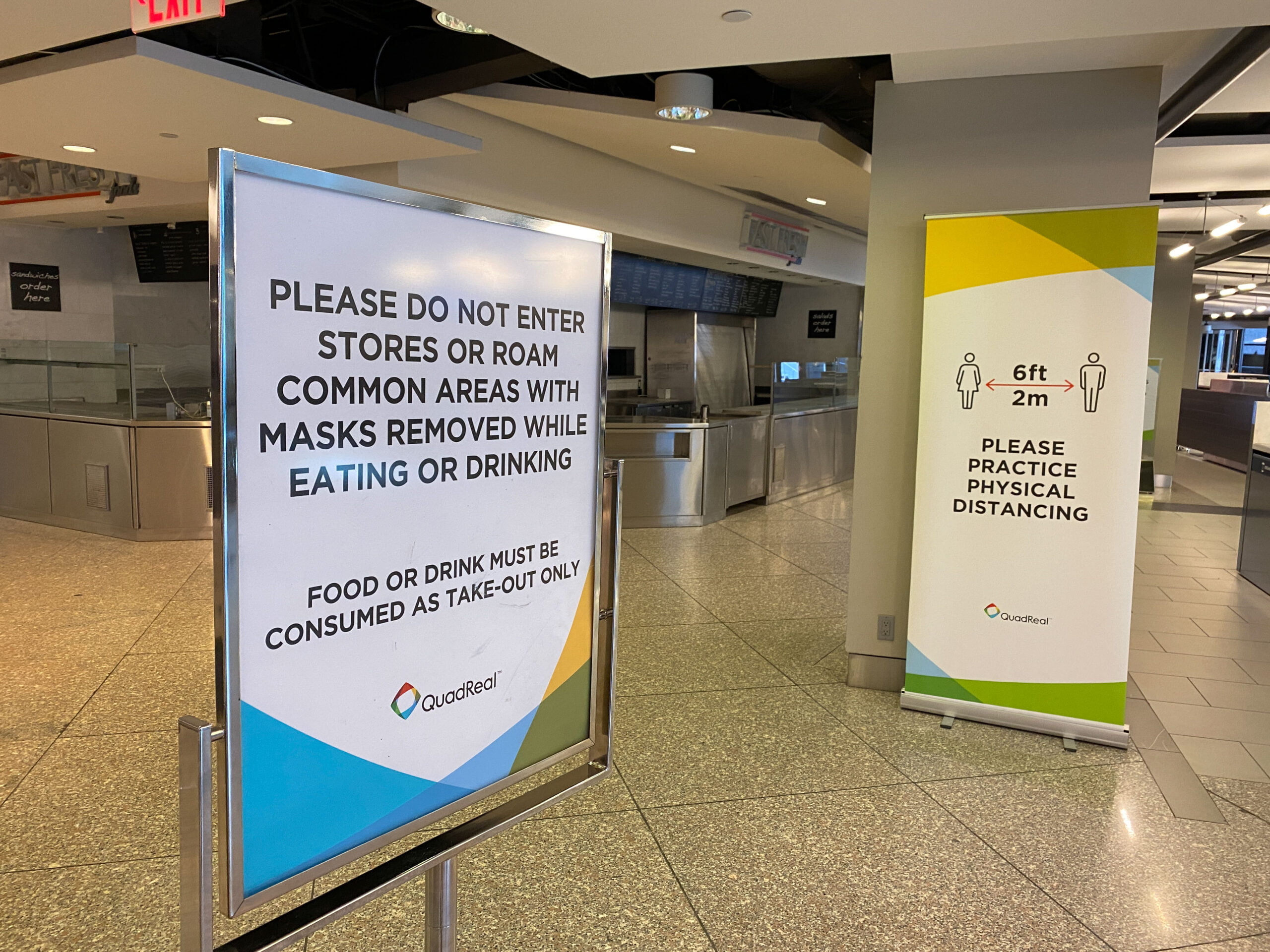
What about the fact that the landlord and/or tenant’s decision to close was done at the suggestion of the government and health authorities, or by their direct order? What about the parties’ respective obligations to “comply with laws”? Does liability risk change if the landlord keeps common areas of a property operating? What if there are no operating tenants in a building – may the landlord close access? What about the fact that the overwhelming number of the leases say the rent must be paid regardless of the circumstances (no set off, deduction or withholding of rent)?
What happens to estimated monthly rents when municipalities defer the obligation to pay taxes, and operating costs decrease because of lack of use and there is a corresponding temporary decrease in actual expenses, or deferment of those expenses?
All the balls are now up in the air and we are all jesters, furiously juggling, waiting for the first and heaviest ball— the rent— to come around on April Fool’s Day 2020. It is expected that many non-operating commercial tenants in the country will consciously elect not pay the rent in full, or at all, on that day as they try to conserve resources and take a “wait and see” approach. Some will forget they gave the landlord the right to withdraw the money from their accounts by way of pre-authorized payment or provided post-dated cheques – an oversight likely not to be repeated in future months.
Landlords who usually look to their default rights of distress, voiding of conditional rights, and termination to induce payment will find themselves largely powerless as it is impractical to terminate tenancies with no replacement in hand. Expected tenancy failures suggest market rents will face downward pressures.

Also, landlords should anticipate a damaging counterattack from tenants whose leases are enforced and who want to stay. We would expect judicial sympathy for tenants facing landlord enforcement and expect laws of equity and proportionality of the default to the remedy actually taken to be paramount. When the courts get back to business as usual, we can count on applications for relief from forfeiture and expect they will be readily granted.
Landlords seeking to enforce leases may have exploitable weaknesses in their arguments. For instance, the Landlord may have been in default under the terms of the lease by closing (or not closing) the mall or the building; refusing to adjust monthly estimated rent to mirror actual expenses, delays in processing reconciliations and a myriad of other reasons. As cash flow is reduced in the coming weeks or months, maintenance and repairs and the meaning of “first class condition” may become issues for undercapitalized landlords. Also, where are landlords going to find new tenants?
There will be some tenants who will seek to take advantage of unique provisions of their leases to terminate and vacate the premises. There will be landlords who will want to cull troublesome tenants or tenants who have rental rates below market, or who have aspirations of rebranding or redevelopment. Also, parties should anticipate many current deals will unravel due to the many forces still beyond their control.
In a couple of years there will be unique judicial decisions on the wording of Act of God and Force Majeure clauses, the meaning of frustration, the impossibility of performance and whether certain concepts and clauses actually support the remedy taken. There will be cases testing the meaning of damage to property in business interruption insurance policies. The money spent on prosecuting those cases won’t be worth it for some landlords or tenants. Perhaps the money would be better spent on matters of common benefit which perpetuate the economic relationship.

The retail real estate market is dominated in Canada by a group of large landlords who are related to pension funds, insurance companies and other large institutional investors. Their response to the 2009 financial crisis illustrated that they have access to funding, are able to think “big picture”, see beyond individual tenants, resist pressure to sign bad deals and have the interests of the current and future pensioners and investors (employees of all those tenant businesses) in mind.
With all of the considerations above in the balance, what kind of temporary alliance can landlords and tenants entertain, and how will it vary by region? Might they come to an agreement that includes a deferral of all or part of the rent? Perhaps there is some negotiating room. For instance, a large portion of the immediate cash outlay on any property is tied up in the taxes and operating costs. Property taxes are now being deferred by many municipal authorities and a portion of the operating costs will not be incurred as a result of properties being closed or hours scaled back. Temporary agreements between landlords and tenants also buy time for more detailed planning and perhaps some due diligence on particular tenants (and landlords).
In cases where tenants have the assets and resources to weather the storm, landlords are likely to resist a solution involving rent abatement alone. A tenant could offer amendments to the lease or the space in return. A landlord will also want to know that its concessions will save jobs and that management and shareholders of the tenant are also making sacrifices. Few large landlords will have the people available now to negotiate those deals in the short term and the inherent uncertainty that exists may make all parties reluctant to bind themselves until the smoke clears.
There are different types of properties and different types of tenants. We all expect that government, quasi-government, insurance and other institutional, financial, grocery store and pharmacy tenants with a clear ability to pay will pay their rent, in full, and on time. Almost all other retailers will be hit harder than many service businesses that operate from office buildings, who are also scaling down but will continue to offer services and carry on business. Some industrial and manufacturing properties are still operating and making products and sales. Deals will need to be crafted to suit the particular circumstances.
Alliances usually only last until the strategic goal is achieved – in this case getting everyone back on a footing where there is a chance for a semblance of business as usual. A landlord and tenant alliance can be without prejudice, drafted so that either party can withdraw on reasonable notice, and provide for the deferral of some or all of the rent for a period of time. Meanwhile, the government will tinker with the economic levers, deal with some of the issues affecting commercial real estate and try to instill confidence again. It is likely that many landlords will not come to terms with their tenants and the rent may be only partially paid. In such a case, it is still open to a landlord to agree to do nothing for today. A truce today may be a good decision that will allow everyone to focus on defeating the real foe.
Please contact any of the authors should you wish to learn more about these matters.
**The authors would like to acknowledge and thank articling student Brianne Quesnel for her contributions to this article.

Dennis Tobin: dtobin@blaney.com
View Dennis’ bio at: blaney.com/lawyers/dennis-tobin

John Wolf: jwolf@blaney.com
View John’s bio at: blaney.com/lawyers/john-wolf

Michael Gilburt: mgilburt@blaney.com
View Michael’s bio at: blaney.com/lawyers/michael-gilburt







As the operator of a small commercial real estate company we are now working with our tenants on a case by case basis.
We started with abatement to some tenants if an office building that we couldn’t make safe as the building is also used by three methadone clinics.
Our public facing tenants were offered rent abatements. One took the offer, another failed to pay rent and offered mutual terms.
Others have asked for outright forgiveness or offered to vacate.
Decisions are based on tenant loyalty, expectation of future tenants, length of distress, and any future corporate plans.
The pandemic has taken a toll to everyone, Economic is now at freeze lets take consideration to renters as well. perhaps give better rates for this time only