MUJI Opens 2nd Largest Store in Canada at Surrey’s Guildford Town Centre [Photos]

Date:

Share post:

Minimalist Japanese retailer Muji has opened its second largest Canadian store at the Guildford Town Centre in Surrey near Vancouver. It is now the largest Muji store in British Columbia, bigger than the downtown Vancouver Muji store on Robson Street which became the largest outside of Asia when it opened in 2017.

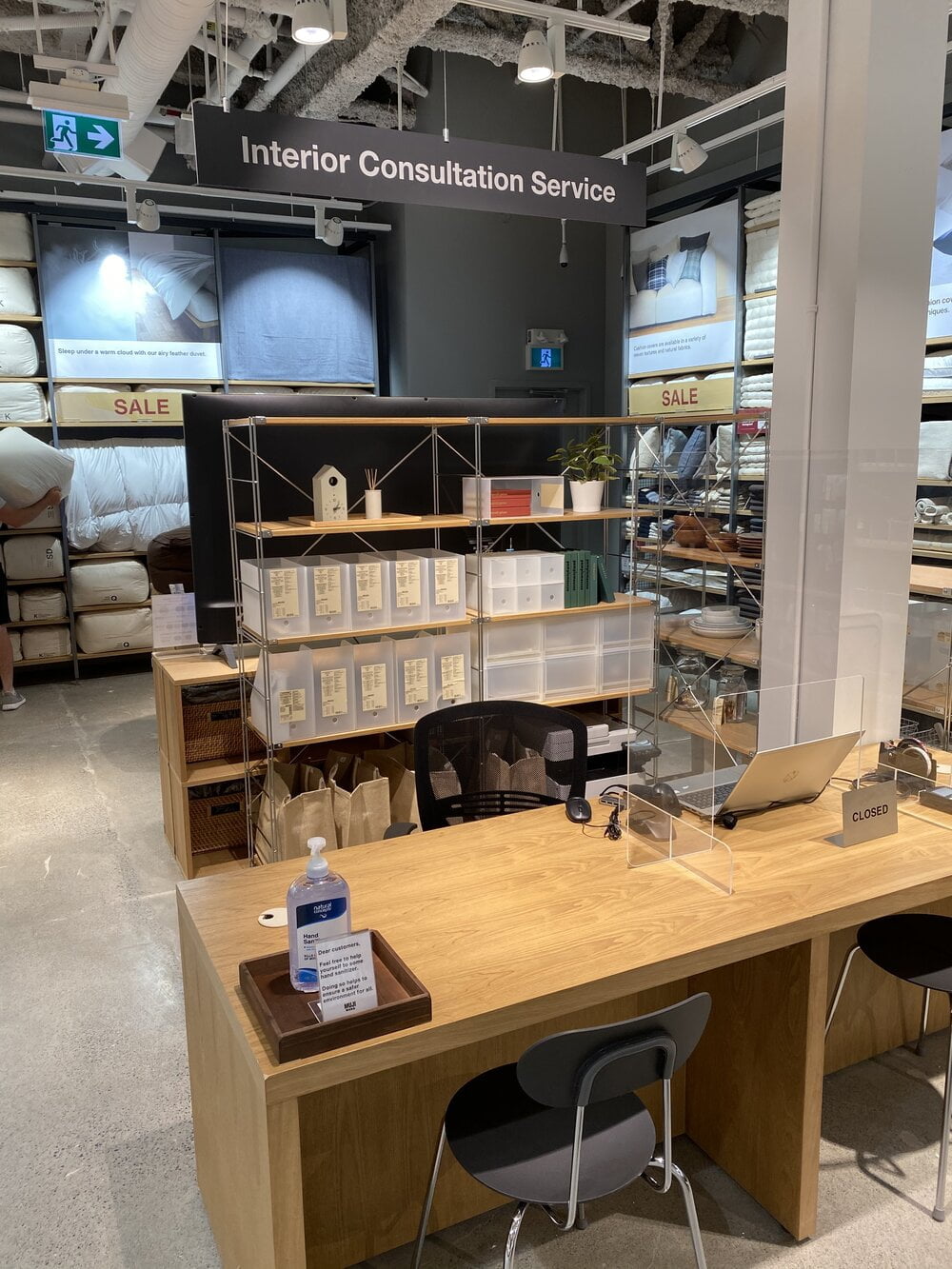
The 15,890-square-foot Guildford Town Centre Muji store is the first suburban location in Canada to span two levels. The first floor spans 8,387 square feet according to lease plans, with the second level encompassing 7,512 square feet. Escalators connect the two levels. The store’s design is similar to other Muji stores in Canada, featuring an exposed ceiling and natural wood accents throughout. Given the COVID-19 pandemic, the store’s layout is more spacious than expected.

Physical distancing is encouraged with the store’s capacity set at 50 people. Hand sanitizer is available in the store for all customers. Face masks are encouraged though not required. Returned merchandise will be quarantined for three days before returning to the sales floor. According to a sign in the store, cash will not be accepted while credit and debit cards can be used for payment.

The main floor of the Guildford Muji store includes departments for stationery, health & beauty, kitchen & tableware, laundry/cleaning, storage, and furnishings for the living room and bedroom. Upstairs is women’s wear, men’s wear, children’s wear, accessories, bags & shoes, ‘inner wear’, and travel goods. The second level also includes Muji’s embroidery service and fabric print service. The Muji ‘aroma bar’ is temporarily not available, according to the company, as a safety measure due to COVID-19.

CLICK FOR INTERACTIVE MALL MAP AT GUILDFORD TOWN CENTRE

Youtube video

CBRE Vancouver‘s office, including Martin Moriarty and Mario Negris, were involved in negotiating the Guildford lease deal with landlord Ivanhoé Cambridge. The duo also negotiated the lease deals for Muji’s other four stores in British Columbia. Brokerage CBRE has been involved with Muji’s negotiations across Canada, led by Arlin Markowitz, Senior Vice President of CBRE’s Downtown Toronto Urban Retail Team.

Muji’s opening is good news at a challenging time. In March, businesses deemed ‘non-essential’ were forced to close in British Columbia as well as across Canada. Stores have begun to open slowly — last month mall-based stores were permitted to reopen in British Columbia, and shoppers are starting to come back. The shutdown hit the bottom line for most businesses and some have filed for bankruptcy protection and some have closed entirely.

The largest Muji store in Canada is located in downtown Toronto at the Atrium complex on the corner of Yonge Street and Dundas Street West. It was also the first Muji location in Canada when it opened in 2014 — the 4,400-square-foot store was expanded to an impressive 20,000 square feet over two levels in November of 2018, making it the largest Muji location outside of Asia. Prior to that, the downtown Vancouver Muji store, measuring more than 14,500 square feet, held the title for the largest Muji store outside of Asia.

Youtube video

Muji now operates nine stores in Canada. Four of those are in the Vancouver area, including the Robson Street flagship that opened in December of 2017, a Metropolis at Metrotown location which expanded in 2018 to 12,305 square feet, a store at CF Richmond Centre which expanded to 9,212 square feet in February of 2019, and the new Guildford Town Centre store which is the largest of them all. In the Greater Toronto Area, Muji operates its massive downtown Toronto flagship store as well as a 5,225-square-foot store at Mississauga’s Square One (opened in November of 2015), a 6,375-square-foot store at Toronto’s Yorkdale Shopping Centre (opened in October of 2016), a 6,000-square-foot space at CF Markville which opened in the summer of 2017, and a store at Scarborough Town Centre, measuring about 6,800 square feet which opened in March of 2018.

In 2018, Muji was re-evaluating its Canadian operations as it looked to open larger stores. That was according to Masaaki Kanai, Chairman of parent company Ryohin Keikaku, who told us in an interview in 2018 that Muji is not only looking at opening substantially larger stores, but that it is also considering opening grocery stores, hotels, designing public realm, and even getting into residential development. A Muji hotel location was rumoured to be part of a new development on Bloor Street in Toronto, though no formal announcements have been made.

Muji was also said to be looking at the Montreal, Edmonton, and Calgary markets to open stores. No announcements have been made yet, though landlords had confirmed that they were having conversations last year.

COVID-19 has changed the retail industry at least for the time being, and expansion plans for some brands are said to have been put on hold. We’ll continue to follow Muji’s expansion in the Canadian market, which could include new units as well as possible expansions of some existing units in Ontario.

Youtube video

LEAVE A REPLY

Please enter your comment!
Please enter your name here

RELATED ARTICLES

Subscribe to the Newsletter

Subscribe

* indicates required

RECENT articles

Quebec Removes QST from Select Foods and Household Essentials

Quebec has removed QST from selected foods, toilet paper and facial tissues, requiring retailers to update product classifications and checkout systems.

Retail Insider “Real Estate & Leasing Report”: Scarcity and Curation Reshape Canadian Retail

Retail Insider's latest Real Estate & Leasing Report examines how limited retail space, selective investment, and redevelopment strategies are reshaping Canada's commercial property market, with growing performance gaps between prime retail assets and secondary centres.

Maxi Plans 13,000-Square-Foot Store at Montreal’s Former Forum

Maxi will open a 13,000-square-foot grocery store at Montreal’s former Forum in 2027, extending Loblaw’s compact urban discount strategy.

B.C.-Built Lemonade Lab Brings Tap Payments to Kid-Run Businesses

B.C.-built Lemonade Lab gives young entrepreneurs access to tap payments, digital storefronts and business lessons under parental supervision.

How B.C.’s House of Q Built a North American BBQ Brand Through Specialty Retail

From competition pits to hundreds of retail shelves, B.C.-based House of Q is building a North American BBQ brand through specialty retail and award-winning products.

Toronto-Based Rawcology launches GUT TO GO probiotic snack bites, expands retail distribution across Canada

The launch marks the company's latest product expansion as it responds to growing consumer interest in convenient foods with added nutritional benefits.

June spending holds steady as Canadians balance essentials and experiences: RBC

“The breadth of spending increases across categories points to households maintaining a cautiously optimistic view heading into the summer even as they remain selective about bigger-ticket discretionary purchases.”

Retailers risk losing sales as more shoppers expect tap-to-pay, Oobit survey finds

44% say a no-tap business feels outdated, a perception problem that compounds the lost sales.

Why consumer behaviour is becoming harder to predict in the AI shopping era

"The whole game is moving from understanding audiences to understanding intent. The brands that make that jump win.”

Why smart retail brands are investing more in in-store experiences despite e-commerce growth

80% of consumers say in-person events are the most trusted way to discover new products — and 85% are more likely to make a purchase after engaging with a brand in person. 

Daily Synopsis: July 14, 2026

Fake fashion stores mislead Canadian consumers online, how malls have sifted with society, Steve's Music auctioning remaining gear, Healthy Planet opening store, Frenchy's thrift store gets own musical, and other news.

Retail Insider “Luxury Report”: Control, Concentration and the Rise of Canada’s Premier Retail Nodes

Canada's luxury retail market is becoming increasingly concentrated around a select group of premier destinations as brands prioritize flagship stores, direct customer relationships and experience-led retail. Retail Insider's latest report examines the forces reshaping luxury investment, real estate and competition.

Bakebe Finds Early Success at CF Markville as Experiential Retail Continues to Grow

Bakebe has opened its first Canadian location at CF Markville, bringing its app-guided baking concept to Canada as experiential retail continues to grow.

Canadian Retailers Face New Discovery Challenge as Shoppers Turn to AI

Canadian retailers face a new challenge as shoppers turn to AI for product discovery, with Retail Rewired’s Chris Parsons urging stronger content, reviews and product data.

Canadian Retail Employment Rebounds but Remains Down Nearly 72,000 Jobs

Canadian wholesale and retail employment rose in June but remains down nearly 72,000 jobs, with Suzanne Sears warning of staffing and service pressures.

Aritzia, Group Dynamite outperform retail sector by targeting affluent shoppers: analyst

Winder said both companies have posted results that far exceed typical retail growth, with strong double-digit sales increases and improved profit margins at a time when many retailers are contending with cautious consumer spending.

Canadians entering pay periods with much of income already committed: MNP survey

61 per cent of Canadians say at least half of their income is already allocated before they receive it.

Restaurant industry leads Canada in youth job growth through first half of 2026

While most other industries have been cutting youth jobs, the restaurant industry employed an average of 52,770 more youth during the first half of 2026 than during the same period in 2025.

Jersey Mike’s opening first Manitoba restaurant as Redberry expands Canadian footprint

The opening also launches a five-day fundraising campaign in support of Make-A-Wish Canada, part of a broader commitment announced in May to raise $1 million for the charity by 2030.

Rising costs and supply chain volatility put consumer goods brands under growing pressure: DOSS

36% made major business decisions using outdated or incorrect data.