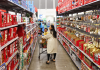
More than five months into the pandemic, we can start seeing how life will look like on the other side. At the grocery store, some changes will disappear while others will stay with us for the foreseeable future.
FOOD PRICES ARE INCREASING IN CANADA DUE TO COVID-19
Food is getting more expensive everywhere, including Canada. We are expecting food prices to increase by 4%. Additional costs to do anything these days are too much to absorb for farmers, processors, and distributors. Financial results were impressive for the first few quarters, to be sure, but sunny days for food companies will not last. Many companies are pivoting and trying to reach consumers who are looking for new options. The foodservice industry is barely at 60% of what it was before COVID-19, but starting to pick up, and consumers are finding new ways to get food by adopting fresh habits.
Products like beef have gone up by as much as 20% since January. Some factors have nothing to do with the pandemic, but COVID-19 unquestionably did not make things easier for financially insecure consumers. Food security was a challenge in Canada even before COVID and the pandemic has made matters worse. The ratio of Canadians who have experienced food insecurity at least once in the last 12 months went from 1 in 8 to 1 in 7. In other words, almost 700,000 more Canadians have now experienced food insecurity. That is why organizations like Second Harvest and Food Banks Canada play such a critical role. No government programs, not even CERB, can help Canadians so quickly. And given that CERB will end in September, we desperately need food rescuing to help those in need.
Perishables are more in fashion now since we spend more time in the kitchen. Staying at home will get consumers to process their own food more often. Non-perishables were highly popular at the start of the pandemic, but consumers got more acquainted with ingredients they can cook within recent months. With more people working from home, or from anywhere but work really, we are expecting to see more consumers buying fresh more often.
This spells bad news from brand companies, the ones you find in the middle of the grocery store. You know the ones. As such, portfolios are likely to shrink, and less choice will be offered to consumers in months to come. Carrying more than 39,000 food items in one store can be expensive, so “less is more” will be our grocers’ new motto. But who needs Twinkie-flavored milk, really? And yes, it exists.
GROCERY ECOMMERCE IS THRIVING IN THE WAKE OF COVID PANDEMIC
Another massive change we are experiencing is online food purchasing. In only five months, we have seen many markets in Canada go from being severely underserved to being offered several options. Liquor stores, specialty stores, and of course mainstream grocers are out there delivering food within two hours, sometimes even faster. It is now socially normalized to let a stranger pick your food; if you live in a city of over 200,000 inhabitants in Canada now, it is very reasonable to expect your online order to be delivered within two hours, with little or no substitutions. That is the new benchmark. Instacart, Voilà by Sobeys, Longos in Ontario, all are looking at new standards and expectations. Accuracy has also changed and orders are being fulfilled with accuracy rates higher than 95%.
In 2017, grocers got their wake-up call when Amazon acquired Whole Foods, but these grocers barely committed to online delivery. We saw the timid emergence of Clicks and Collects everywhere, which was nowhere near good enough for pandemic-stricken households. Now, the online game is on. Of all food sales, online purchases were under 2% before the pandemic, but by the end of this year, online food sales could reach almost 4%. Canada will be less of a lagging country – the Unites States is at 7% while the United Kingdome is at 10%.
However, if you do order online, expect to pay more. On average, including delivery fees, consumers will pay 7% to 10% more for delivered food compared to a regular visit at the grocery store. Quite the difference, perhaps even problematic for those who are stuck home, for one reason or another. The disabled, elderly, and people in self-isolation are compelled to pay more. Optics may make things appear to be unfair, but the socioeconomics of home food delivery will evolve and likely become more competitive.
As for the plexiglass, arrows on the floor, masks, and cart-cleaning staff, they will go away. Maybe. Eventually.
Dr. Sylvain Charlebois is Dean of the Faculty of Management at Dalhousie University in Halifax. Also at Dalhousie, he is Professor in food distribution and policy in the Faculty of Agriculture. His current research interest lies in the broad area of food distribution, security and safety, and has published four books and many peer-reviewed journal articles in several publications. His research has been featured in a number of newspapers, including The Economist, the New York Times, the Boston Globe, the Wall Street Journal, Foreign Affairs, the Globe & Mail, the National Post and the Toronto Star. Follow him on twitter @scharleb.